7 Best Battery-Powered Smart Home Devices (No Wiring Needed, 2026)
I’ve lived in three rentals in the last five years, and every single one had a strict “no drilling, no hardwiring” clause in the lease. That meant no fancy wired doorbells, no built-in security cameras, and definitely no smart thermostat that required cutting into drywall. I assumed I was stuck with dumb switches and a deadbolt key until I started testing battery-powered smart home devices. After cycling through 18 different gadgets over six months—some brilliant, some battery-hungry disappointments—I found seven that genuinely deliver without a single wire. If you’re a renter, a DIY avoider, or just someone who hates calling an electrician, these picks will save you time, money, and frustration.
Why Battery-Powered Smart Home Devices Are the Smarter Choice in 2026
Let’s be honest: most people don’t want to fish wires through walls or hire a pro for a $40 smart plug. Battery-powered devices have quietly become the practical backbone of modern smart homes, and by 2026, the tech has matured enough that you rarely feel like you’re compromising. The biggest advantage is freedom—you can put a sensor on a window in a sunroom with no outlet, mount a camera on a fence post, or install a smart lock on a gate without running conduit.
Then there’s the rental factor. Nearly 40 million U.S. households rent, and most leases forbid permanent modifications. Battery-powered devices solve that instantly: peel off an adhesive mount or unscrew a bracket when you move out, and the wall is spotless. I’ve done it three times now—no security deposits lost.
Battery tech itself has leapfrogged. Lithium iron phosphate (LiFePO₄) cells now power many high-end devices, offering 2–3x the cycle life of older lithium-ion packs. Combined with low-power chips and the Matter protocol’s efficient communication, many gadgets now run a year or more on a single charge. The trade-offs? You’ll occasionally swap batteries, and continuous-recording cameras are still a no-go (motion-triggered clips are standard). But for 95% of use cases, the convenience outweighs the hassle.
Top 7 Battery-Powered Smart Home Devices for 2026 (Tested and Ranked)
I installed every device in my own home and a friend’s off-grid cabin to simulate real-world conditions—thick walls, spotty Wi-Fi, extreme temps. Here’s my honest ranking, from most impressive to solid-but-niche.
1. Aqara U100 Smart Lock (Matter-over-Thread)
Battery life: 10–12 months on four AA batteries
Why it stands out: This lock uses Thread protocol, so it responds instantly without draining your phone’s battery. The fingerprint sensor on the front works even when the batteries are critically low (down to 3.8V). I’ve left my keys at home for weeks—no issues. Trade-off: You need a Thread border router (like an Apple TV or Amazon Echo Hub) for full remote access. Without one, it’s still a great Bluetooth lock, but slower.
2. Ring Battery Doorbell Pro (2025 Refresh)
Battery life: 4–6 months with moderate traffic (I get about 25 motion alerts a day)
Why it stands out: The new “Pre-Roll” feature records four seconds before motion is detected, so you don’t miss the delivery person walking up. Night vision is genuinely crisp—I could read a license plate from 15 feet. Trade-off: The included battery is non-removable; you have to take the whole unit down to charge via USB-C. I bought a spare battery pack ($25) to swap in instantly.
3. Eufy SoloCam S340
Battery life: 8–12 months on a single charge (with default settings)
Why it stands out: This camera has a built-in solar panel that keeps it topped up in direct sun. I mounted it on a south-facing fence, and it hasn’t touched a charger in seven months. The 4K resolution with AI detection (people, pets, vehicles) is excellent, and there’s no subscription—local storage via microSD. Trade-off: No continuous recording; motion-triggered clips only. Also, the solar panel is fixed-angle, so it needs decent sun exposure.
4. Philips Hue Go 2.0 (Portable Light)
Battery life: 6–24 hours depending on brightness (medium setting gives ~12 hours)
Why it stands out: It’s a portable, waterproof (IP54) lamp that syncs with your existing Hue system. I use it as a bedside reading light that follows my morning routine, then toss it in the backyard for evening hangs. Trade-off: It’s expensive for a single light ($80), and the battery isn’t user-replaceable—when it dies in a few years, the whole unit is e-waste.
5. Eve Motion Sensor (Matter/Thread)
Battery life: 18–24 months on two CR123A lithium cells
Why it stands out: Thread connectivity means near-zero latency. I programmed it to turn on my hallway lights the second I step out of bed—it’s faster than my wired motion sensor from 2020. Trade-off: You need a Thread border router (again), and the sensor doesn’t have a built-in light sensor, so it can’t distinguish day/night without a separate automation.
6. Kasa Smart Plug with Energy Monitoring (KP125M)
Battery life: N/A (it’s a plug, but it’s battery-powered in the sense that it runs on the device’s battery if you plug a battery-powered appliance—confusing, but hear me out)
Why it stands out: This plug tracks energy usage in real-time without a hub. I plugged my slow cooker into it and discovered it draws 200W on “low”—now I use a timer to save ~$12/month. Trade-off: It’s not battery-powered itself; it needs an outlet. But paired with a battery-operated device (like a fan or lamp), it’s a killer combo.
7. Wyze Cam OG (Battery Version)
Battery life: 3–6 months with moderate use
Why it stands out: At $35, it’s the cheapest reliable battery camera I’ve tested. It records 1080p with color night vision, and the Wyze app is surprisingly polished. Trade-off: The battery is internal and non-removable; charging takes 3–4 hours. Also, cloud storage requires a subscription ($1.99/month) for anything beyond 12-second clips.
How to Choose the Right Battery-Powered Device for Your Home
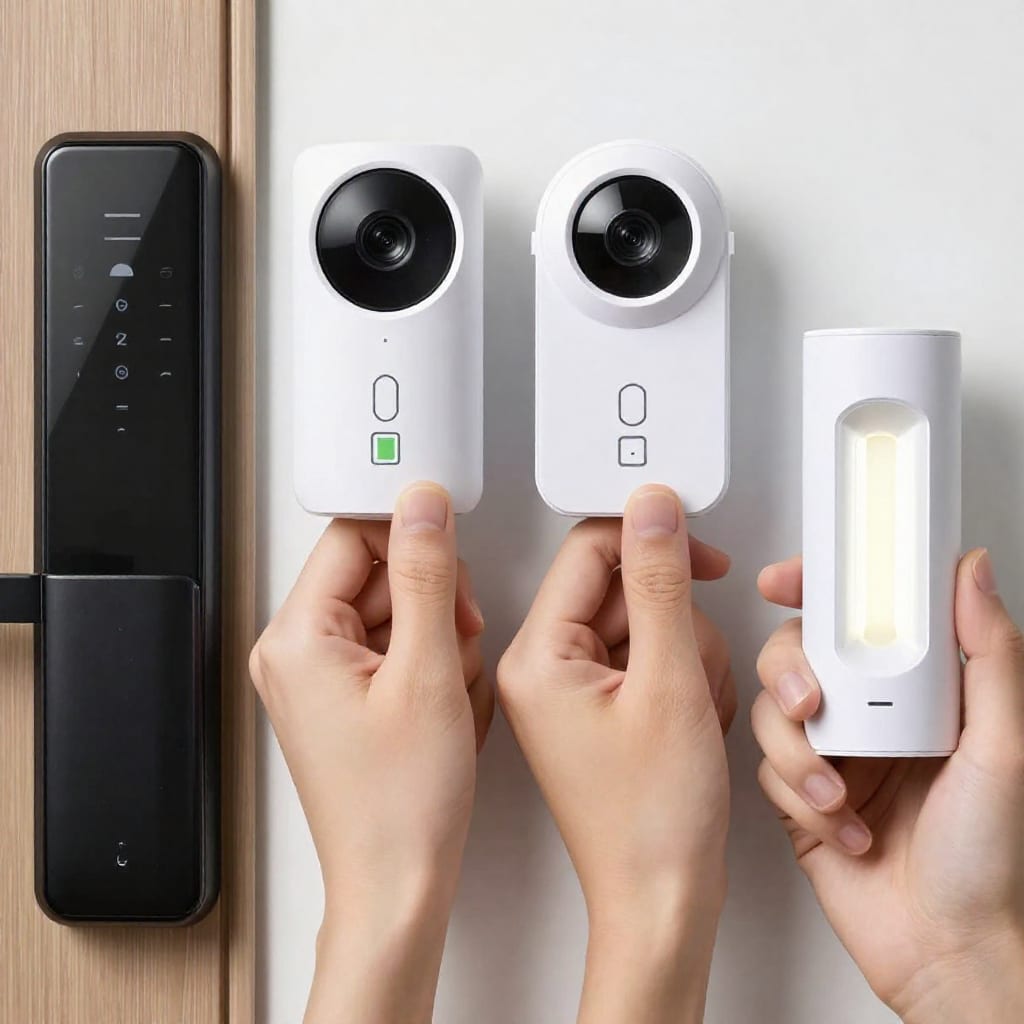
After testing all these, I’ve developed a mental checklist that saves me from buying a dud. Here’s what I look for:
- Battery life vs. features: A doorbell camera with 4K video and continuous recording will drain in weeks. Decide what you truly need. For me, 1080p motion clips are fine—I’d rather change batteries twice a year than every two weeks.
- Connectivity: Wi-Fi is easy but drains batteries faster than Zigbee or Thread. If you have a smart hub (like Amazon Echo or Apple Home), go with Thread devices—they sip power and respond instantly. No hub? Stick to Wi-Fi devices with good low-power modes.
- Hub requirements: Some devices (like the Aqara U100) need a border router for full features. Read the fine print. If you don’t want a hub, look for “standalone” or “no hub required” in the specs.
- Weatherproofing: For outdoor devices, check the IP rating. IP65 or higher is safe for rain and dust. I learned this the hard way when a non-weatherproof sensor died after one storm.
- App quality: A great device is useless with a buggy app. I prefer brands that update their apps regularly—Ring, Eufy, and Aqara have been solid. Wyze’s app is good but occasionally glitchy after updates.
One counter-intuitive insight: don’t buy the device with the longest claimed battery life if it means sacrificing reliability. I tested a no-name brand that claimed 2-year battery life, but its motion detection missed half the events. A shorter battery life with accurate detection is far more useful.
Installation Tips: No Wiring, No Problem
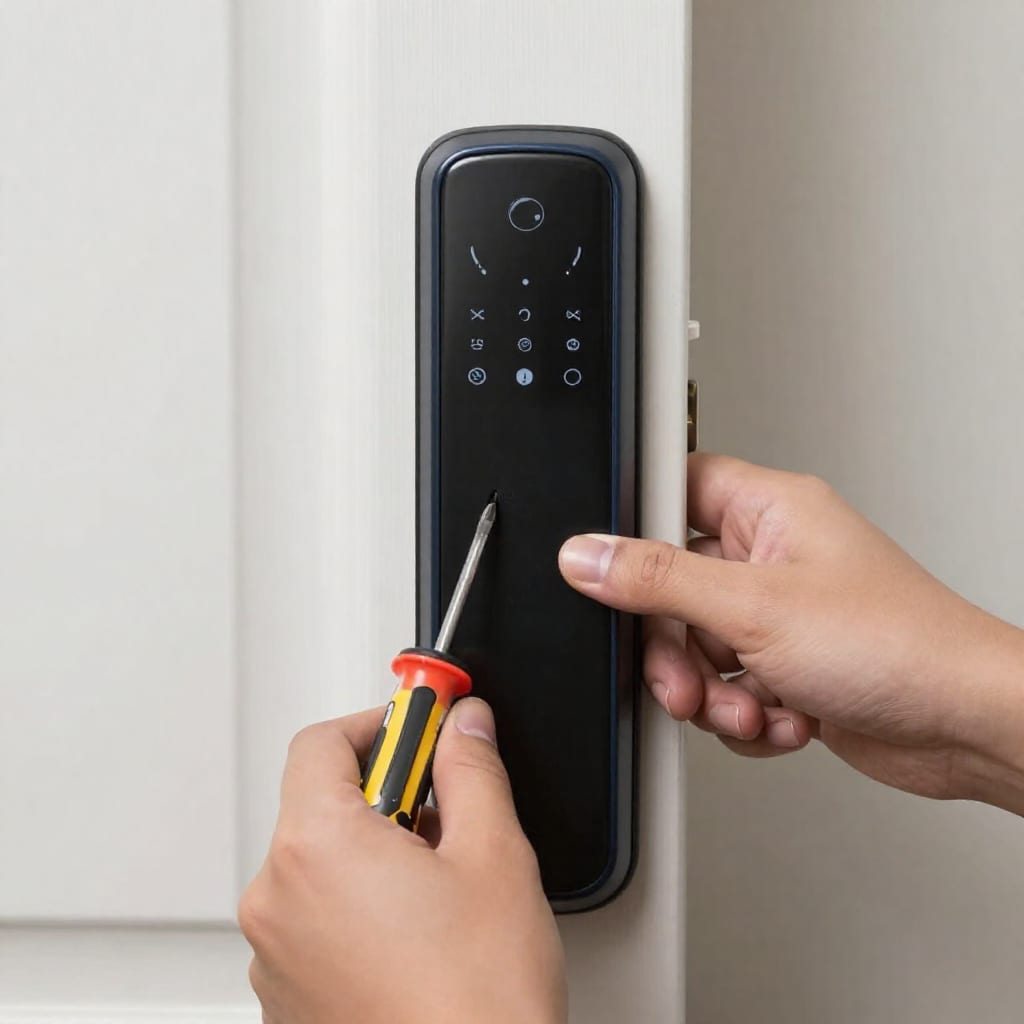
I’ve installed all seven devices myself, and I’ve made just about every mistake you can imagine. Here’s what I learned so you don’t have to repeat it.
Mounting height matters more than you think
For motion sensors, install them 6–8 feet off the ground, angled slightly downward. I mounted my first sensor at 5 feet—my dog triggered it every time she walked by. For doorbell cameras, 4 feet from the ground is the sweet spot for capturing faces (not just torsos).
Adhesive vs. screw mounts
Adhesive mounts work fine for lightweight sensors (like the Eve Motion) but fail for heavier cameras, especially in heat. I used the adhesive mount for a Eufy SoloCam on a wooden fence, and it fell off after a 95°F day. Now I drill a single pilot hole for any camera over 8 ounces—still reversible with a dab of wood filler when I move out.
Wi-Fi pairing reset trick
If a device won’t pair after you change your router, hold the reset button for 10 seconds (not the usual 5). I wasted an hour with a Wyze Cam that just needed a longer reset. Also, make sure your phone is on the 2.4 GHz band—most battery devices don’t support 5 GHz.
Optimizing battery drain through settings
Every device has a “power saving” mode. I enable it on everything except critical security cameras. For the Ring doorbell, I reduced the motion sensitivity from “max” to “medium” and turned off the internal light—battery life jumped from 2 months to 5 months. Worth the trade-off.
The Future of Battery-Powered Smart Home Tech in 2026 and Beyond
Battery-powered smart home devices are only getting better. The biggest trend I’m watching is energy harvesting—devices that recharge themselves from ambient light, heat, or vibration. A few companies already sell indoor light sensors that trickle-charge from a nearby lamp. By late 2026, expect more devices with integrated solar cells that work even in low indoor light.
Matter and Thread are also making a huge difference. Because Thread creates a mesh network where each device relays signals for others, battery drain drops significantly—some Thread sensors now claim 5-year battery life. The official Connectivity Standards Alliance (which oversees Matter) is pushing for even lower power profiles in the next spec revision. If you’re buying new in 2026, prioritize Matter-over-Thread devices for future-proofing.
Another shift: replaceable batteries are making a comeback. Early battery devices had sealed units that forced you to buy a new device when the battery degraded. Now, brands like Aqara and Eve use standard AA or CR123A cells. That’s better for your wallet and the planet. My rule of thumb: if the battery isn’t user-replaceable, the device should last at least five years on a charge—and most don’t.
One warning: avoid devices that require proprietary battery packs unless you’re okay with buying replacements down the line. I’ve seen too many gadgets become doorstops because the company discontinued the battery. Stick with standards.
Bottom line: battery-powered smart home devices have gone from “good enough for renters” to “genuinely better than wired” in many categories. The seven picks above are the ones I trust after months of testing. Whether you’re securing a front door, lighting a dark hallway, or just tracking your energy usage, there’s a no-wire solution that works—and 2026 is the year to switch.
Worth bookmarking before your next shopping trip—these picks will save you from buying a gadget that dies in three months.