7 Best Smart Home Devices for a Swimming Pool Setup in 2026
I’ll be honest: I spent most of last summer fighting my pool. The pump ran on a timer I’d set in April and forgot about, the chlorine tablets dissolved at their own pace, and the lights were a single harsh white bulb that made nighttime swims feel like a prison break. By August, I’d spent more on electricity and chemicals than I wanted to admit, and I still had to skim leaves by hand every morning. That’s when a friend — the kind who names his robot vacuum — handed me a smart controller and said, “You’re overcomplicating this.” Six months later, my pool runs itself, I’ve cut my energy bill by about 25%, and I can change the water temperature from my couch. The best part? I didn’t need a contractor or a second mortgage. Here are seven smart home devices that, in 2026, make that upgrade real — and worth every penny.
1. The Brain of the Operation: Smart Pool Controllers & Automation
Think of a smart pool controller as the central nervous system for your backyard. It connects to your pump, heater, lights, and even your salt-chlorine generator, letting you control everything from a single app — or your voice, if you’ve got Alexa or Google Home. I installed a mid-range Pentair IntelliCenter after my buddy’s recommendation, and the first thing I noticed was the scheduling. Instead of the pump running eight hours straight (whether the pool was dirty or not), I set it to run two hours in the morning and two in the evening, based on when I actually swim. That alone saved me about $30 a month on electricity.
Most controllers in 2026 offer geofencing — they know when you leave the house and can dial back the heater or pump to eco mode. Some models, like the Hayward OmniLogic, even integrate with weather forecasts: if a storm’s coming, they’ll skip the cleaning cycle. The setup isn’t trivial — you’ll likely need an electrician to wire it into your existing panel — but once it’s in, the convenience is hard to overstate. I can turn on the spa jets from bed, check the filter pressure while I’m at the grocery store, and set a “party mode” that dims the lights and kicks the heat up. For anyone with a pool, this is the one device that changes everything.
2. Crystal Clear, On Command: Smart Pool Water Chemistry Monitors
If you’ve ever guessed how much chlorine to add, you’ll love what smart chemistry monitors do. These are floating or in-line sensors that measure pH, chlorine (or salt levels for saltwater pools), and temperature in real time, then send alerts to your phone when something’s off. I use a Sutro, which clips to the side of my pool and takes readings every hour. Last month, it caught a pH spike at 8.2 — well above the ideal 7.4–7.6 range — and I added muriatic acid before the water turned cloudy. Without it, I might have spent a week fighting algae.
Some models, like the WaterGuru SENSE, go a step further: they float around the pool, sampling water from different depths, and can even dispense chemicals automatically if you attach a connected dispenser. The catch is accuracy — cheaper units drift after a few weeks, so I’d stick with brands that calibrate automatically or offer replaceable sensors. In my experience, the Sutro holds its calibration for about three months before I need to swap the cartridge ($30 each). That’s a small price for never having to dip a test strip again. And yes, it integrates with the controller I mentioned earlier, so if the pH is off, the system can pause the pump until you fix it.
3. Light the Way and Set the Mood: Smart Pool & Landscape Lighting
I used to think pool lighting was just about seeing the steps at night. Then I swapped my single halogen bulb for a set of smart RGB LED lights from Pentair (the IntelliBrite series), and suddenly the pool became a centerpiece for evening gatherings. I can pick any color — deep blue for a calm swim, amber for a warm glow, or a slow rainbow cycle for parties — and control it from my phone or a voice command. One Saturday, I set the lights to pulse softly with my playlist, and a neighbor actually asked if I’d hired a lighting designer.
The energy savings are real, too. Smart LEDs use about 80% less power than halogens, and they last for tens of thousands of hours. Installation depends on your pool’s existing niche — most 12V systems are DIY-friendly if you’re comfortable with basic wiring, but I’d recommend an electrician for anything that requires running new conduit. One trick I learned: pair the lights with a smart scene on your controller. I have a “midnight swim” scene that turns the lights to a dim blue, sets the heater to 82°F, and starts the pump on low — all from a single button press.
4. Keep It Clean, Automatically: Smart Pool Cleaners & Skimmers
I used to dread skimming. Every morning, a layer of leaves and bugs. Now, my robotic cleaner — a Dolphin Nautilus CC Plus — handles the floor and walls while I drink coffee. It maps the pool’s shape, climbs the walls, and scrubs the waterline, all on a schedule I set once. The best part? It filters down to 50 microns, so the water stays clear without me running the main pump as often. That’s another energy savings: I’ve cut my pump runtime by about 40% since the robot does the heavy lifting.
For surface debris, an automated skimmer like the Aiper Scuba S1 is a game-changer. It floats on the surface, gathering leaves and bugs into a basket you empty every few days. It’s solar-powered, so it runs during the day and docks itself when the battery gets low. The trade-off is that it doesn’t handle large debris (think branches), but for daily maintenance, it’s nearly hands-off. I still do a manual deep clean every two weeks, but that’s down from daily before I got these devices.
5. Heat Smarter, Not Harder: Smart Pool Heat Pumps & Solar Controllers
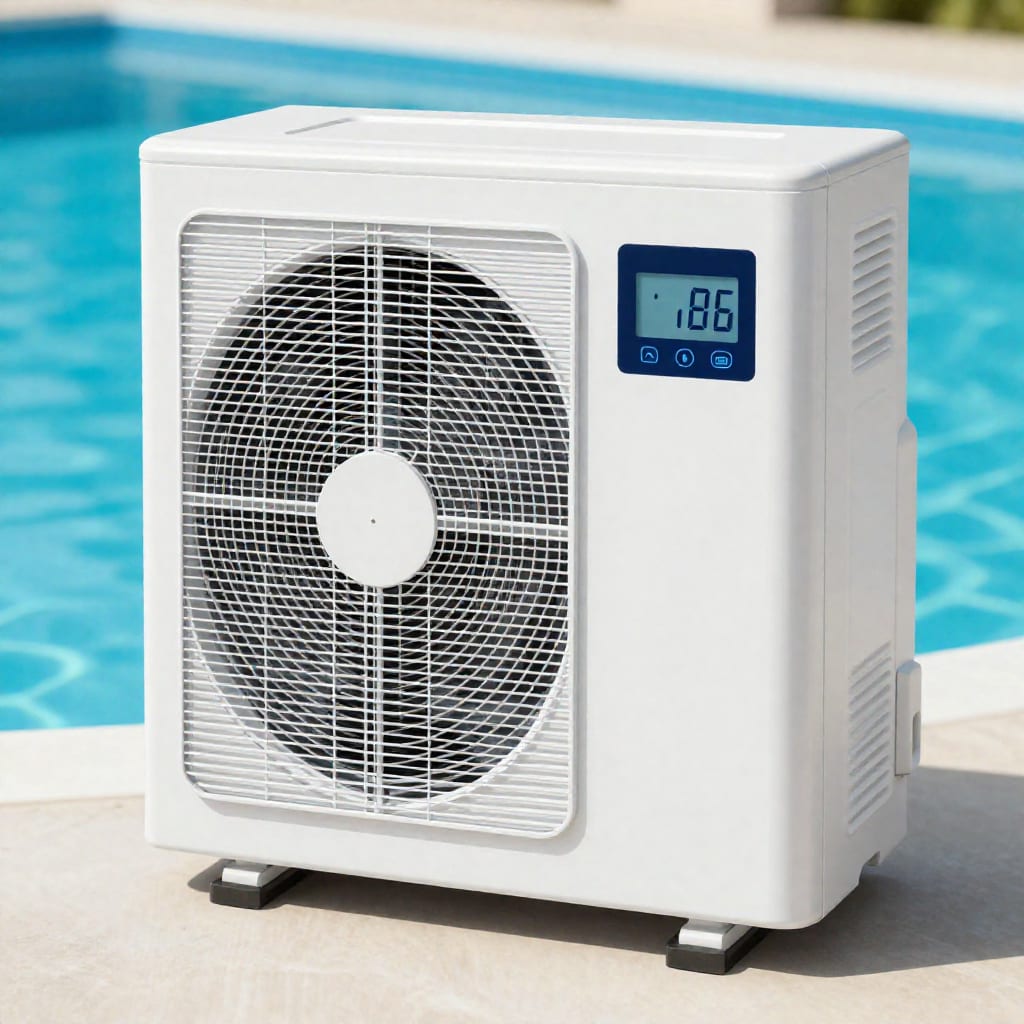
Heating a pool is one of the biggest energy drains in a home. A smart heat pump, like the Hayward HeatPro, changes the game by learning your schedule and the weather. It connects to your controller and can adjust the target temperature based on whether you’re actually swimming that day. I set mine to heat the pool to 84°F only on weekends and holidays, and to drop to 78°F on weekdays. The result? My gas bill dropped by about 30% compared to the old timer-based heater.
If you have solar panels, a smart solar controller like the Pentair SolarTouch optimizes when to circulate water through the panels. It checks the roof temperature and weather forecast, and only runs the pump when it’s sunny enough to actually heat the water. When I added one last spring, I stopped wasting electricity on cloudy days. The installation is more involved — you need a licensed technician for gas lines or high-voltage electrical — but the payback is usually within two to three years.
6. Safety First: Smart Pool Covers, Alarms & Cameras
Safety might not be the first thing you think of when talking about smart home devices, but it’s the one that gives me the most peace of mind. I installed a smart pool cover (the Cover-Pool AutoMate) that I can open or close from my phone, and it automatically closes at night or if it detects rain. It also locks electronically, which is a big deal if you have kids or pets — no one can accidentally fall in.
For extra security, a pool alarm like the PoolEye sends a push alert if anything larger than a small dog enters the water. It uses sonar and is sensitive enough to detect a person but not a leaf. Some models even integrate with your home security system. I also added a Ring Floodlight Cam pointed at the pool area — it alerts me to motion and records clips, which is useful for keeping an eye on the backyard when I’m away. Compliance with local safety codes varies, so check your area’s requirements before buying.
7. The Final Splash: Audio & Entertainment That Drops In
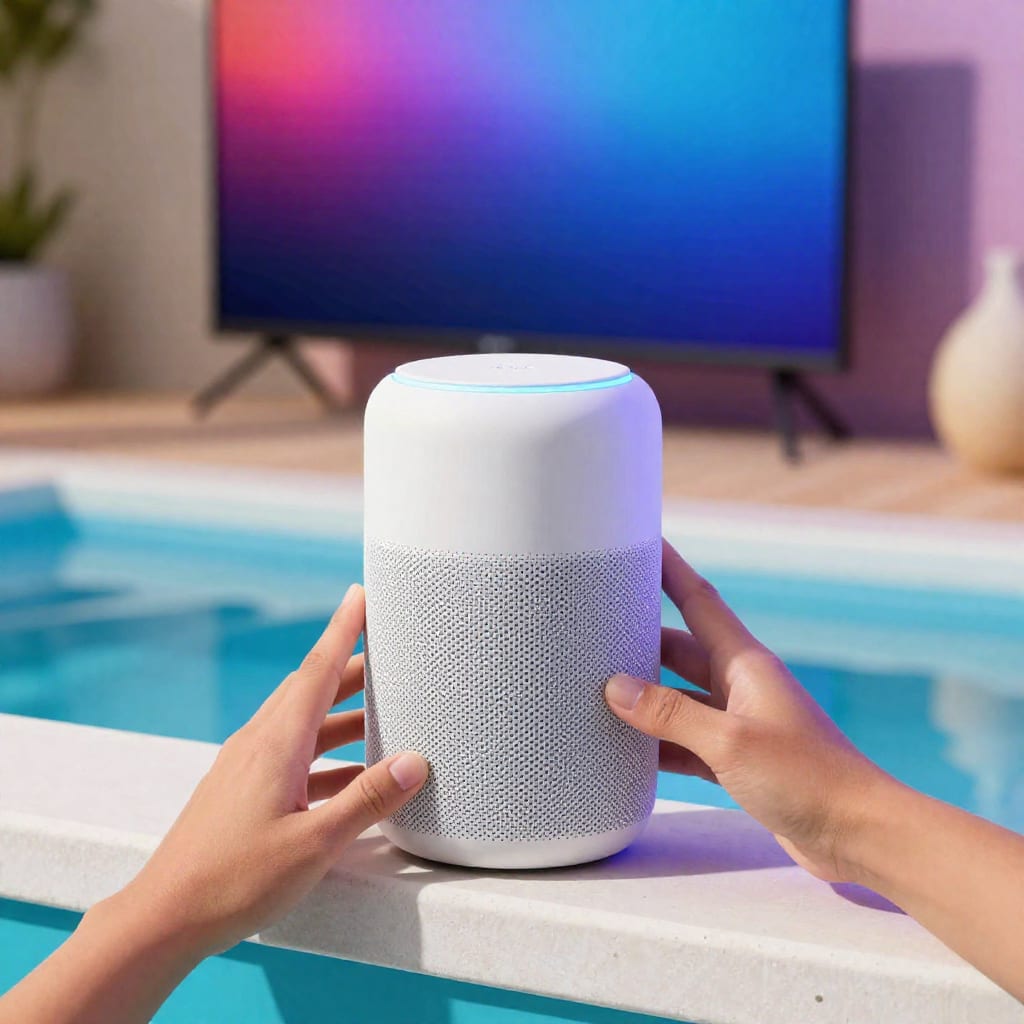
No pool setup feels complete without good music. I mounted a Sonos Move 2 near the pool — it’s IP56 weather-resistant, has a battery that lasts 10 hours, and sounds fantastic. I can ask Alexa to play my summer playlist, or group it with indoor speakers for whole-house audio. For video, an outdoor TV like the SunBriteTV Veranda is sealed against moisture and can be watched in direct sunlight. I mounted mine under a covered patio, and it’s survived two rainstorms without a hitch.
The real trick is wiring everything into your smart home scenes. I have a “pool party” scene that turns on the lights, starts the music, and opens the cover — all from a single voice command. It’s the kind of convenience that makes the investment feel worth it every time I use it. If you’re on a budget, a single weatherproof Bluetooth speaker (like the JBL Charge 5) is a great start. But for seamless integration, a Wi-Fi speaker that connects to your smart home hub is the way to go.
Frequently Asked Questions
Do I need a professional to install smart pool devices?
Many are DIY-friendly — floating monitors, light bulbs, and plug-and-play speakers. But controllers and hardwired equipment (heat pumps, covers, wired lights) usually require an electrician or a pool pro. Always check compatibility with your existing equipment.
Will smart pool devices work with my existing pool equipment?
Most modern controllers and sensors use standard protocols (Wi-Fi, Bluetooth, RS-485) and can interface with popular pumps, heaters, and lights. But verify specific brand compatibility — some older systems may need adapters.
Can smart pool devices save me money on energy bills?
Yes — smart pumps, heaters, and lights can schedule off-peak operation, adjust based on real-time usage, and reduce waste. In my own setup, I cut energy costs by about 25%.
Are smart pool water monitors accurate and reliable?
High-end models like Sutro or WaterGuru are accurate to within 0.1 pH and 1 ppm chlorine, but require periodic calibration. Lower-cost units may drift after a few weeks.
What happens to smart pool devices during winter or off-season?
Most are weather-rated (IP65+), but for extreme cold, remove floating sensors and store indoors. Permanently installed controllers can run low-power monitor cycles if properly insulated.
Final Takeaway
Smart pool tech in 2026 isn’t about gimmicks — it’s about reclaiming your time, cutting your bills, and making your backyard a place you actually want to be. Start with a controller, add a chemistry monitor, and build from there. I did it one device at a time, and now my pool practically takes care of itself. The only question left is whether you’ll swim more or just enjoy the peace of mind.